
You know the feeling. You walk into a conference room (or log into Zoom), and someone pulls up a deck. The lights dim, physically or metaphorically.
Then comes the performance.
The presenter reads bullet points that you could have read yourself in thirty seconds. They wave their hands. They use charisma to bridge the gaps in their logic. If you ask a question, they say, "Great question, we'll get to that on slide 14."
By the end of the hour, you have a vague sense of "direction," but no real idea if the plan will actually work. You leave with a deck that, on its own, is just a cryptic list of fragments.
Amazon saw this trap twenty years ago. They realized that slide decks are designed for the speaker’s convenience, not the audience’s understanding. They prioritize "low-resolution" signaling over "high-resolution" thinking.
So they banned them.
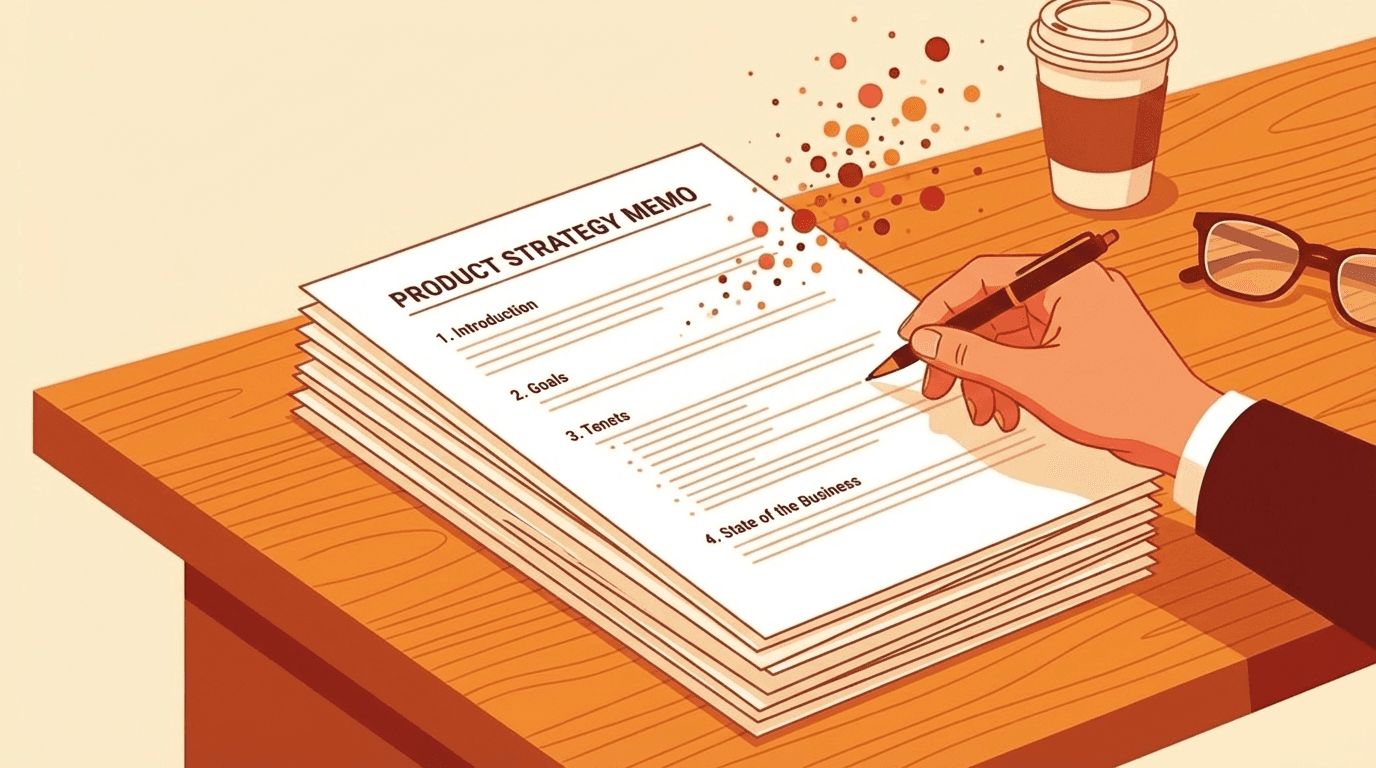
They replaced the pitch with the narrative. Specifically, the Six-Page Memo.
It sounds like a boring administrative switch, like changing your expense reporting software. It isn't. It’s a complete rewiring of how an organization thinks, argues, and decides.
Here is how you can use the narrative architecture of the 6-pager to stop pushing the ball uphill and let gravity do the work.
The Illusion of Bullet Points
Bullet points are dangerous because they strip information of its connective tissue.
Revenue is down.
Competitor X launched a feature.
We need $5M.
See that list? It looks logical. But it hides the causal link. Is revenue down because of Competitor X? Or is it because the site reliability is terrible? The bullet point doesn't force you to say. It lets you hide.
Writing a sentence forces you to choose a subject, a verb, and a predicate. You have to write: "Revenue dropped 4% because Competitor X’s new feature lured away our enterprise segment."
Now we have something we can debate. Now we have high-resolution data.
The Silent Meeting
This is the part that freaks people out the most.
In a "narrative culture," the meeting starts with silence. Total, library-style silence.
For 20 to 30 minutes, everyone sits and reads the memo. No presenting. No "walking through the deck." Just reading.
Why?
Speed: We read much faster than people speak. You can absorb a dense, complex argument in 20 minutes that would take an hour to present poorly.
Democracy: In a presentation, the loudest voice or the most charismatic speaker usually wins. In a silent meeting, the best logic wins. It levels the playing field for introverts and people who need time to process.
Shared Reality: When the discussion starts, everyone isn't reacting to the first slide. They are reacting to the whole argument. The "study hall" atmosphere guarantees everyone is operating from the exact same dataset.
The Anatomy of the 6-Pager
You don't need to overthink the structure, but you do need a container for your thoughts. The strict six-page limit (not including the appendix) is there to force economy. If you can't explain your strategy in six pages, you don't understand it well enough yet.
Here is the flow that works:
1. The Introduction (The Hook)
Recommended length: ½ - 1 page.
State the context, the complication, and the proposed resolution. If the project is in trouble, say it in the first sentence. "In 2024, Service X exceeded its latency budget, causing a 2% drop in conversion."
Honesty builds trust faster than "spin."
2. Goals (Inputs vs. Outputs)
Recommended length: ½ page
Most teams confuse what they do with what they get.
Output Metrics: Revenue, Stock Price, Customer Satisfaction. You can't control these directly. You can only influence them.
Input Metrics: Latency, Features Shipped, Sales Calls Made. These are the levers you pull.
A good memo focuses obsessively on the inputs. If you pull the right levers, the outputs usually take care of themselves.
3. Tenets (The Tie-Breakers)
Recommended length: ½ page
Tenets aren't values. "Integrity" is not a tenet because nobody argues for "Dishonesty."
A good tenet helps you make a hard trade-off without asking your boss.
Bad: "We write good code."
Good: "Speed over Completeness." (This tells an engineer to ship the beta rather than wait for perfection).
4. The State of the Business
Recommended length: 1 page
This is where you look in the mirror. Use data, not feelings. This section is the most labor-intensive because you have to synthesize reality into a story.
5. Strategic Priorities
Recommended length: 2-3 pages
Based on what we learned, what are we actually going to build? This connects the resource ask (people, money) to the goals.
The War on "Weasel Words"
If you take one thing away from this, let it be the ban on "weasel words."
These are adjectives that sound good but mean nothing. They are the fluff that fills the void where data should be.
"Significantly" → Is that 5% or 500%? If you don't know, don't write it.
"Efficiently" → How do you measure it? "Reduced processing time from 4s to 1.2s."
"Users love this" → Prove it. "This feature has a retention rate of 80%."
"We plan to optimize" → What is the mechanism? "We will implement caching."
When you strip away these words, you find the gaps in your knowledge. It’s painful. You’ll realize you don't actually know if the new feature is "working." You'll have to go find the SQL query.
But that pain is good. That pain prevents you from launching a product based on a hunch.
How to Actually Do This
Don't announce "We are banning PowerPoint starting Monday." That’s a recipe for a mutiny.
Start with one project. Maybe one that’s stuck.
Be the guinea pig. Write the first memo yourself. It will take you a week. It will feel like pushing a rock uphill. You will hate it.
Then, call the meeting. Hand out the papers (or send the link). Ask for silence. Watch the discomfort in the room for the first five minutes.
Then watch what happens at minute 25.
The heads come up. The conversation starts. But it’s not the usual conversation. No one is asking "What does this acronym mean?" or "Why are we doing this?"
Instead, they are shredding your logic. They are pointing out a flaw in paragraph 4 on page 3. They are debating the trade-off in your tenets.
It’s intense. It feels like your idea is being dismantled. But notice what isn't happening: nobody is confused.
You aren't spending the hour getting on the same page. You are spending the hour making the decision.
That’s the momentum. That’s the gravity you get for free.
By the time you walk out, you won't just have a decision. You’ll have a document that explains why you made the decision. Two years from now, when a new hire asks why the product works this way, you won't have to try and remember what was said in a meeting in 2025. You’ll just send them the link.
Stop performing. Start writing. The machine you build will work better for it.
You know the feeling. You walk into a conference room (or log into Zoom), and someone pulls up a deck. The lights dim, physically or metaphorically.
Then comes the performance.
The presenter reads bullet points that you could have read yourself in thirty seconds. They wave their hands. They use charisma to bridge the gaps in their logic. If you ask a question, they say, "Great question, we'll get to that on slide 14."
By the end of the hour, you have a vague sense of "direction," but no real idea if the plan will actually work. You leave with a deck that, on its own, is just a cryptic list of fragments.
Amazon saw this trap twenty years ago. They realized that slide decks are designed for the speaker’s convenience, not the audience’s understanding. They prioritize "low-resolution" signaling over "high-resolution" thinking.
So they banned them.
They replaced the pitch with the narrative. Specifically, the Six-Page Memo.
It sounds like a boring administrative switch, like changing your expense reporting software. It isn't. It’s a complete rewiring of how an organization thinks, argues, and decides.
Here is how you can use the narrative architecture of the 6-pager to stop pushing the ball uphill and let gravity do the work.
The Illusion of Bullet Points
Bullet points are dangerous because they strip information of its connective tissue.
Revenue is down.
Competitor X launched a feature.
We need $5M.
See that list? It looks logical. But it hides the causal link. Is revenue down because of Competitor X? Or is it because the site reliability is terrible? The bullet point doesn't force you to say. It lets you hide.
Writing a sentence forces you to choose a subject, a verb, and a predicate. You have to write: "Revenue dropped 4% because Competitor X’s new feature lured away our enterprise segment."
Now we have something we can debate. Now we have high-resolution data.
The Silent Meeting
This is the part that freaks people out the most.
In a "narrative culture," the meeting starts with silence. Total, library-style silence.
For 20 to 30 minutes, everyone sits and reads the memo. No presenting. No "walking through the deck." Just reading.
Why?
Speed: We read much faster than people speak. You can absorb a dense, complex argument in 20 minutes that would take an hour to present poorly.
Democracy: In a presentation, the loudest voice or the most charismatic speaker usually wins. In a silent meeting, the best logic wins. It levels the playing field for introverts and people who need time to process.
Shared Reality: When the discussion starts, everyone isn't reacting to the first slide. They are reacting to the whole argument. The "study hall" atmosphere guarantees everyone is operating from the exact same dataset.
The Anatomy of the 6-Pager
You don't need to overthink the structure, but you do need a container for your thoughts. The strict six-page limit (not including the appendix) is there to force economy. If you can't explain your strategy in six pages, you don't understand it well enough yet.
Here is the flow that works:
1. The Introduction (The Hook)
Recommended length: ½ - 1 page.
State the context, the complication, and the proposed resolution. If the project is in trouble, say it in the first sentence. "In 2024, Service X exceeded its latency budget, causing a 2% drop in conversion."
Honesty builds trust faster than "spin."
2. Goals (Inputs vs. Outputs)
Recommended length: ½ page
Most teams confuse what they do with what they get.
Output Metrics: Revenue, Stock Price, Customer Satisfaction. You can't control these directly. You can only influence them.
Input Metrics: Latency, Features Shipped, Sales Calls Made. These are the levers you pull.
A good memo focuses obsessively on the inputs. If you pull the right levers, the outputs usually take care of themselves.
3. Tenets (The Tie-Breakers)
Recommended length: ½ page
Tenets aren't values. "Integrity" is not a tenet because nobody argues for "Dishonesty."
A good tenet helps you make a hard trade-off without asking your boss.
Bad: "We write good code."
Good: "Speed over Completeness." (This tells an engineer to ship the beta rather than wait for perfection).
4. The State of the Business
Recommended length: 1 page
This is where you look in the mirror. Use data, not feelings. This section is the most labor-intensive because you have to synthesize reality into a story.
5. Strategic Priorities
Recommended length: 2-3 pages
Based on what we learned, what are we actually going to build? This connects the resource ask (people, money) to the goals.
The War on "Weasel Words"
If you take one thing away from this, let it be the ban on "weasel words."
These are adjectives that sound good but mean nothing. They are the fluff that fills the void where data should be.
"Significantly" → Is that 5% or 500%? If you don't know, don't write it.
"Efficiently" → How do you measure it? "Reduced processing time from 4s to 1.2s."
"Users love this" → Prove it. "This feature has a retention rate of 80%."
"We plan to optimize" → What is the mechanism? "We will implement caching."
When you strip away these words, you find the gaps in your knowledge. It’s painful. You’ll realize you don't actually know if the new feature is "working." You'll have to go find the SQL query.
But that pain is good. That pain prevents you from launching a product based on a hunch.
How to Actually Do This
Don't announce "We are banning PowerPoint starting Monday." That’s a recipe for a mutiny.
Start with one project. Maybe one that’s stuck.
Be the guinea pig. Write the first memo yourself. It will take you a week. It will feel like pushing a rock uphill. You will hate it.
Then, call the meeting. Hand out the papers (or send the link). Ask for silence. Watch the discomfort in the room for the first five minutes.
Then watch what happens at minute 25.
The heads come up. The conversation starts. But it’s not the usual conversation. No one is asking "What does this acronym mean?" or "Why are we doing this?"
Instead, they are shredding your logic. They are pointing out a flaw in paragraph 4 on page 3. They are debating the trade-off in your tenets.
It’s intense. It feels like your idea is being dismantled. But notice what isn't happening: nobody is confused.
You aren't spending the hour getting on the same page. You are spending the hour making the decision.
That’s the momentum. That’s the gravity you get for free.
By the time you walk out, you won't just have a decision. You’ll have a document that explains why you made the decision. Two years from now, when a new hire asks why the product works this way, you won't have to try and remember what was said in a meeting in 2025. You’ll just send them the link.
Stop performing. Start writing. The machine you build will work better for it.
You know the feeling. You walk into a conference room (or log into Zoom), and someone pulls up a deck. The lights dim, physically or metaphorically.
Then comes the performance.
The presenter reads bullet points that you could have read yourself in thirty seconds. They wave their hands. They use charisma to bridge the gaps in their logic. If you ask a question, they say, "Great question, we'll get to that on slide 14."
By the end of the hour, you have a vague sense of "direction," but no real idea if the plan will actually work. You leave with a deck that, on its own, is just a cryptic list of fragments.
Amazon saw this trap twenty years ago. They realized that slide decks are designed for the speaker’s convenience, not the audience’s understanding. They prioritize "low-resolution" signaling over "high-resolution" thinking.
So they banned them.
They replaced the pitch with the narrative. Specifically, the Six-Page Memo.
It sounds like a boring administrative switch, like changing your expense reporting software. It isn't. It’s a complete rewiring of how an organization thinks, argues, and decides.
Here is how you can use the narrative architecture of the 6-pager to stop pushing the ball uphill and let gravity do the work.
The Illusion of Bullet Points
Bullet points are dangerous because they strip information of its connective tissue.
Revenue is down.
Competitor X launched a feature.
We need $5M.
See that list? It looks logical. But it hides the causal link. Is revenue down because of Competitor X? Or is it because the site reliability is terrible? The bullet point doesn't force you to say. It lets you hide.
Writing a sentence forces you to choose a subject, a verb, and a predicate. You have to write: "Revenue dropped 4% because Competitor X’s new feature lured away our enterprise segment."
Now we have something we can debate. Now we have high-resolution data.
The Silent Meeting
This is the part that freaks people out the most.
In a "narrative culture," the meeting starts with silence. Total, library-style silence.
For 20 to 30 minutes, everyone sits and reads the memo. No presenting. No "walking through the deck." Just reading.
Why?
Speed: We read much faster than people speak. You can absorb a dense, complex argument in 20 minutes that would take an hour to present poorly.
Democracy: In a presentation, the loudest voice or the most charismatic speaker usually wins. In a silent meeting, the best logic wins. It levels the playing field for introverts and people who need time to process.
Shared Reality: When the discussion starts, everyone isn't reacting to the first slide. They are reacting to the whole argument. The "study hall" atmosphere guarantees everyone is operating from the exact same dataset.
The Anatomy of the 6-Pager
You don't need to overthink the structure, but you do need a container for your thoughts. The strict six-page limit (not including the appendix) is there to force economy. If you can't explain your strategy in six pages, you don't understand it well enough yet.
Here is the flow that works:
1. The Introduction (The Hook)
Recommended length: ½ - 1 page.
State the context, the complication, and the proposed resolution. If the project is in trouble, say it in the first sentence. "In 2024, Service X exceeded its latency budget, causing a 2% drop in conversion."
Honesty builds trust faster than "spin."
2. Goals (Inputs vs. Outputs)
Recommended length: ½ page
Most teams confuse what they do with what they get.
Output Metrics: Revenue, Stock Price, Customer Satisfaction. You can't control these directly. You can only influence them.
Input Metrics: Latency, Features Shipped, Sales Calls Made. These are the levers you pull.
A good memo focuses obsessively on the inputs. If you pull the right levers, the outputs usually take care of themselves.
3. Tenets (The Tie-Breakers)
Recommended length: ½ page
Tenets aren't values. "Integrity" is not a tenet because nobody argues for "Dishonesty."
A good tenet helps you make a hard trade-off without asking your boss.
Bad: "We write good code."
Good: "Speed over Completeness." (This tells an engineer to ship the beta rather than wait for perfection).
4. The State of the Business
Recommended length: 1 page
This is where you look in the mirror. Use data, not feelings. This section is the most labor-intensive because you have to synthesize reality into a story.
5. Strategic Priorities
Recommended length: 2-3 pages
Based on what we learned, what are we actually going to build? This connects the resource ask (people, money) to the goals.
The War on "Weasel Words"
If you take one thing away from this, let it be the ban on "weasel words."
These are adjectives that sound good but mean nothing. They are the fluff that fills the void where data should be.
"Significantly" → Is that 5% or 500%? If you don't know, don't write it.
"Efficiently" → How do you measure it? "Reduced processing time from 4s to 1.2s."
"Users love this" → Prove it. "This feature has a retention rate of 80%."
"We plan to optimize" → What is the mechanism? "We will implement caching."
When you strip away these words, you find the gaps in your knowledge. It’s painful. You’ll realize you don't actually know if the new feature is "working." You'll have to go find the SQL query.
But that pain is good. That pain prevents you from launching a product based on a hunch.
How to Actually Do This
Don't announce "We are banning PowerPoint starting Monday." That’s a recipe for a mutiny.
Start with one project. Maybe one that’s stuck.
Be the guinea pig. Write the first memo yourself. It will take you a week. It will feel like pushing a rock uphill. You will hate it.
Then, call the meeting. Hand out the papers (or send the link). Ask for silence. Watch the discomfort in the room for the first five minutes.
Then watch what happens at minute 25.
The heads come up. The conversation starts. But it’s not the usual conversation. No one is asking "What does this acronym mean?" or "Why are we doing this?"
Instead, they are shredding your logic. They are pointing out a flaw in paragraph 4 on page 3. They are debating the trade-off in your tenets.
It’s intense. It feels like your idea is being dismantled. But notice what isn't happening: nobody is confused.
You aren't spending the hour getting on the same page. You are spending the hour making the decision.
That’s the momentum. That’s the gravity you get for free.
By the time you walk out, you won't just have a decision. You’ll have a document that explains why you made the decision. Two years from now, when a new hire asks why the product works this way, you won't have to try and remember what was said in a meeting in 2025. You’ll just send them the link.
Stop performing. Start writing. The machine you build will work better for it.
Use cases
Resources
Backed by


Use cases
Backed by
Use cases
Resources
Backed by