Product
Resources
PricingContact

Article

Atlassian Product Collection & Feedback

We've been building for this.

At Team '26 last week, Atlassian announced Product Collection.

It's the biggest move Atlassian has made into product management to date. Four tools wired together: Jira Product Discovery, a new Feedback tool, Rovo, and Pendo for analytics.

The pitch is good. AI made building cheap. The hard part now is figuring out what to build. So Atlassian put together a stack that goes from feedback to decision to delivery, all inside Jira.

We agree with the premise. We've been building on top of Atlassian since 2022 for the same reason.

So, what just happened? And where does Released fit?

Cycle, but bigger

If you've been watching the feedback category, the new Feedback tool will feel familiar. Atlassian acquired Cycle.app last year — a feedback collection and synthesis tool — and a lot of what shipped this week is shaped by that.

That's a good thing. Cycle was solid: it pulled feedback from many places into one inbox and made patterns visible. Putting that natively inside Jira, with Rovo doing the AI work and Pendo wired in for behavioral data, is the right move.
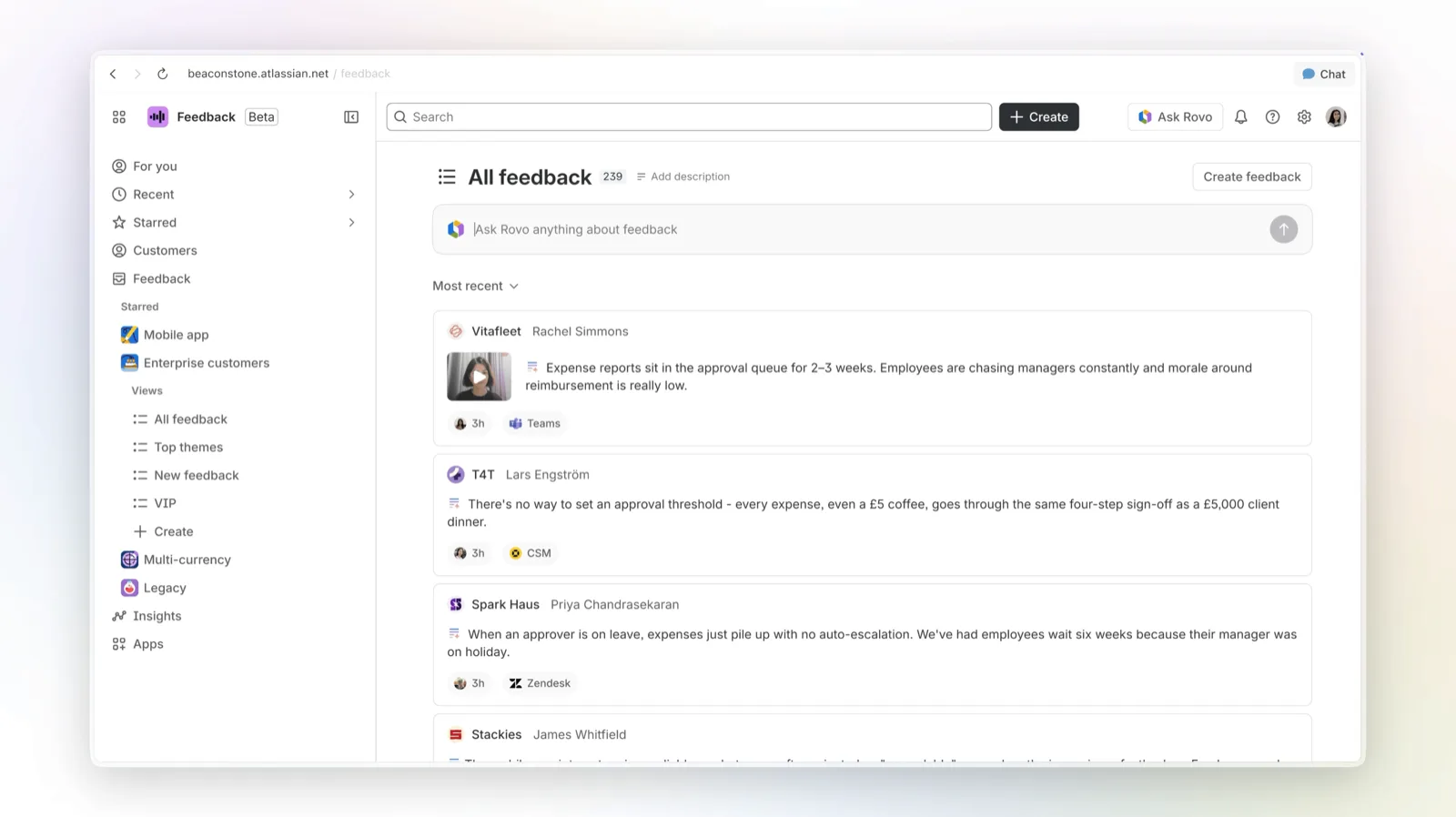
But Cycle had a limitation, and Feedback inherits it. It listens to what's already been said. Support tickets in JSM. Sales notes in Salesforce. Threads in Slack. Surveys from wherever you run them.

Those are real signals. But they've all been filtered through someone first. A support agent typed the ticket. An AE summarized the call. A CSM dropped the note in Slack. By the time the synthesis engine sees them, they've been paraphrased at least once.

Useful? Yes. The whole loop? No.

What's missing

Customers want to talk to you directly. They want to submit ideas in their own words. They want to see the roadmap before they have to ask a CSM. They want to know what shipped without waiting for someone to write it up.

None of that lives inside Product Collection. It lives in front of your customers. On a portal. On your domain. Inside your product.

That's what we built Released to do.

What Released is
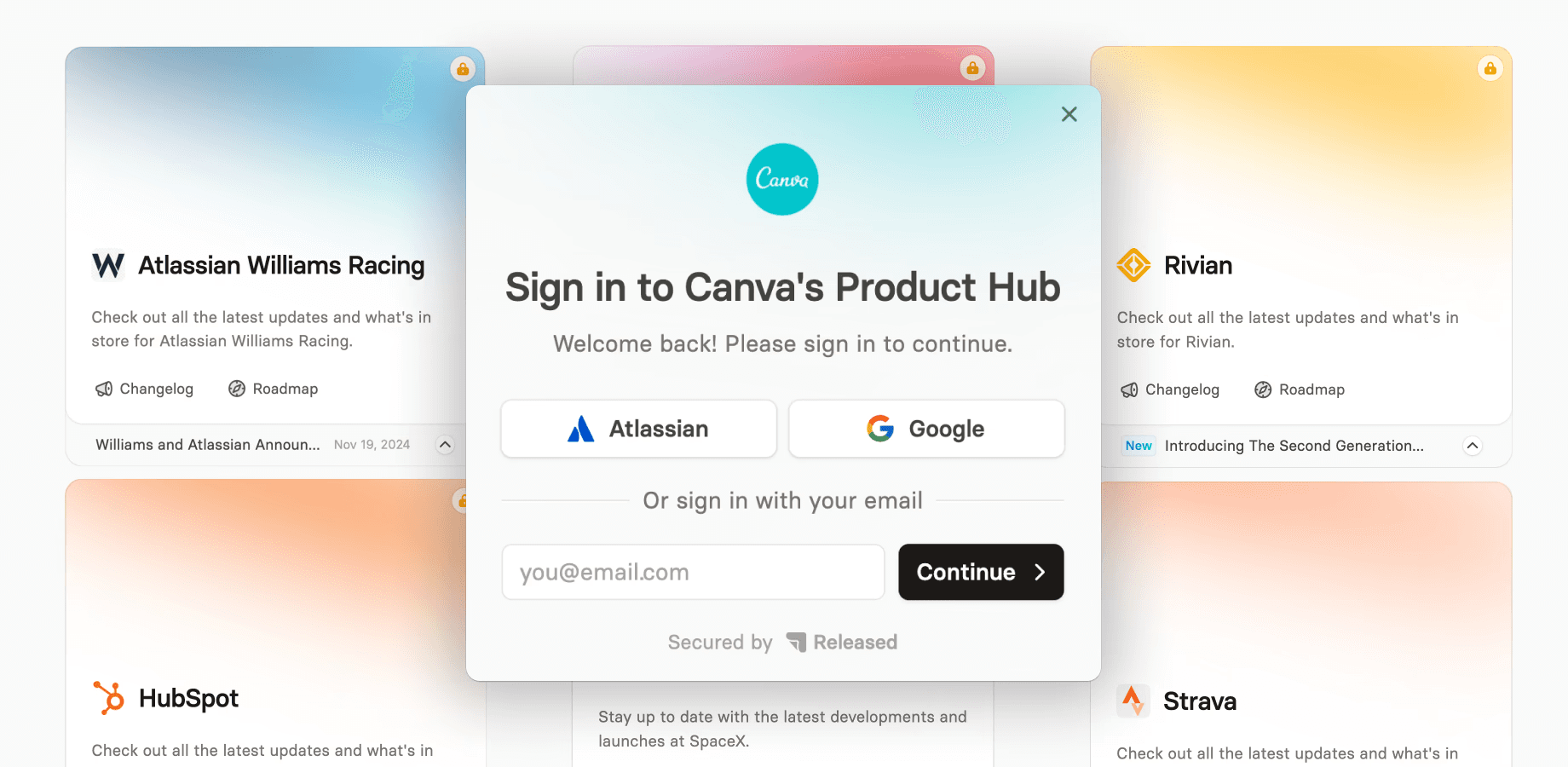
Released is a Jira-native Marketplace app. It turns the parts of your product information that customers should see into proper customer-facing pages, and keeps it all in sync with Jira.

Three things:

  • Feedback portal — a branded portal where customers submit ideas, vote, comment, and follow what they care about. On your domain, or embedded in your app. Submissions also come in from inline widgets and from Slack. Everything lands in one inbox and gets linked to Jira work items or JPD ideas. The customer's voice arrives in Jira with the name, the account, and the context still attached.

  • Public roadmaps — a curated, branded view of your Jira (or JPD) board that customers can actually see. Public, password-protected, or invite-only. Custom domain or embedded inline. You decide what's visible.

  • AI release notes — the customer-facing changelog drafted from your shipped Jira tickets. We draft. You edit. You publish to your portal, Slack, Confluence, or back into your product.

All of it sits under a Product Hub. One branded surface for the portal, roadmap, and changelog. Atlassian ID, Google, or email login. Access controls per hub: internal, restricted, public.

If you're running any of this today with screenshots, Confluence exports, and Notion pages, you know how brittle that gets. Released collapses it into one place that stays in sync with Jira because it lives on top of Jira.

How this pairs

When teams read the announcement and see the word "Feedback," the question we get is direct: does Released still have a role?

Yes. More than before, actually.

Feedback is the inbound synthesis layer. It listens to channels where feedback already lives and turns them into structured themes for your product team.

Released is the outbound channel between you and your customers. Direct voice in. Roadmap, status, and release notes out.

When Feedback rolls out, the feedback you've already collected through Released will be sitting in Jira with full context. That's exactly the kind of clean, attributable signal a synthesis engine wants to work with. The two get better together, not worse.

We're not guessing here. Atlassian Ventures is one of our investors, and we've been a Marketplace partner for years. We're going to keep building toward this picture, and we expect Product Collection to make Released more valuable to our customers, not less.

The outbound side — the part where you tell customers what you did with their input — isn't addressed by Product Collection at all. We've written about why public feature voting fails, closing the loop in Slack, and seven feedback loops that actually work. That's the half we own.

What I'd do today

Product Collection is in Early Access. The waitlist exists for a reason — most teams will wait months before Feedback shows up in their tenant.

Released is generally available right now on the Atlassian Marketplace. Pricing here.

If you're already a Released customer, nothing changes. Keep collecting feedback, keep publishing roadmaps, keep shipping release notes. When Feedback lands in your tenant, you'll have a real corpus for it to chew on.

If you're not yet, today's the day to start. Install Released this afternoon. Open the portal tomorrow. Start collecting direct customer feedback this week — months before Atlassian's new piece even lands in your tenant.

By the time it does, you'll already have customer ideas in Jira with full context, a public roadmap your sales team can point at, and a changelog your CSMs can send to renewing accounts. That's a better starting point than an empty tenant.

Article

Atlassian Product Collection & Feedback

We've been building for this.

At Team '26 last week, Atlassian announced Product Collection.

It's the biggest move Atlassian has made into product management to date. Four tools wired together: Jira Product Discovery, a new Feedback tool, Rovo, and Pendo for analytics.

The pitch is good. AI made building cheap. The hard part now is figuring out what to build. So Atlassian put together a stack that goes from feedback to decision to delivery, all inside Jira.

We agree with the premise. We've been building on top of Atlassian since 2022 for the same reason.

So, what just happened? And where does Released fit?

Cycle, but bigger

If you've been watching the feedback category, the new Feedback tool will feel familiar. Atlassian acquired Cycle.app last year — a feedback collection and synthesis tool — and a lot of what shipped this week is shaped by that.

That's a good thing. Cycle was solid: it pulled feedback from many places into one inbox and made patterns visible. Putting that natively inside Jira, with Rovo doing the AI work and Pendo wired in for behavioral data, is the right move.

But Cycle had a limitation, and Feedback inherits it. It listens to what's already been said. Support tickets in JSM. Sales notes in Salesforce. Threads in Slack. Surveys from wherever you run them.

Those are real signals. But they've all been filtered through someone first. A support agent typed the ticket. An AE summarized the call. A CSM dropped the note in Slack. By the time the synthesis engine sees them, they've been paraphrased at least once.

Useful? Yes. The whole loop? No.

What's missing

Customers want to talk to you directly. They want to submit ideas in their own words. They want to see the roadmap before they have to ask a CSM. They want to know what shipped without waiting for someone to write it up.

None of that lives inside Product Collection. It lives in front of your customers. On a portal. On your domain. Inside your product.

That's what we built Released to do.

What Released is

Released is a Jira-native Marketplace app. It turns the parts of your product information that customers should see into proper customer-facing pages, and keeps it all in sync with Jira.

Three things:

  • Feedback portal — a branded portal where customers submit ideas, vote, comment, and follow what they care about. On your domain, or embedded in your app. Submissions also come in from inline widgets and from Slack. Everything lands in one inbox and gets linked to Jira work items or JPD ideas. The customer's voice arrives in Jira with the name, the account, and the context still attached.

  • Public roadmaps — a curated, branded view of your Jira (or JPD) board that customers can actually see. Public, password-protected, or invite-only. Custom domain or embedded inline. You decide what's visible.

  • AI release notes — the customer-facing changelog drafted from your shipped Jira tickets. We draft. You edit. You publish to your portal, Slack, Confluence, or back into your product.

All of it sits under a Product Hub. One branded surface for the portal, roadmap, and changelog. Atlassian ID, Google, or email login. Access controls per hub: internal, restricted, public.

If you're running any of this today with screenshots, Confluence exports, and Notion pages, you know how brittle that gets. Released collapses it into one place that stays in sync with Jira because it lives on top of Jira.

How this pairs

When teams read the announcement and see the word "Feedback," the question we get is direct: does Released still have a role?

Yes. More than before, actually.

Feedback is the inbound synthesis layer. It listens to channels where feedback already lives and turns them into structured themes for your product team.

Released is the outbound channel between you and your customers. Direct voice in. Roadmap, status, and release notes out.

When Feedback rolls out, the feedback you've already collected through Released will be sitting in Jira with full context. That's exactly the kind of clean, attributable signal a synthesis engine wants to work with. The two get better together, not worse.

We're not guessing here. Atlassian Ventures is one of our investors, and we've been a Marketplace partner for years. We're going to keep building toward this picture, and we expect Product Collection to make Released more valuable to our customers, not less.

The outbound side — the part where you tell customers what you did with their input — isn't addressed by Product Collection at all. We've written about why public feature voting fails, closing the loop in Slack, and seven feedback loops that actually work. That's the half we own.

What I'd do today

Product Collection is in Early Access. The waitlist exists for a reason — most teams will wait months before Feedback shows up in their tenant.

Released is generally available right now on the Atlassian Marketplace. Pricing here.

If you're already a Released customer, nothing changes. Keep collecting feedback, keep publishing roadmaps, keep shipping release notes. When Feedback lands in your tenant, you'll have a real corpus for it to chew on.

If you're not yet, today's the day to start. Install Released this afternoon. Open the portal tomorrow. Start collecting direct customer feedback this week — months before Atlassian's new piece even lands in your tenant.

By the time it does, you'll already have customer ideas in Jira with full context, a public roadmap your sales team can point at, and a changelog your CSMs can send to renewing accounts. That's a better starting point than an empty tenant.

Article

Atlassian Product Collection & Feedback

We've been building for this.

At Team '26 last week, Atlassian announced Product Collection.

It's the biggest move Atlassian has made into product management to date. Four tools wired together: Jira Product Discovery, a new Feedback tool, Rovo, and Pendo for analytics.

The pitch is good. AI made building cheap. The hard part now is figuring out what to build. So Atlassian put together a stack that goes from feedback to decision to delivery, all inside Jira.

We agree with the premise. We've been building on top of Atlassian since 2022 for the same reason.

So, what just happened? And where does Released fit?

Cycle, but bigger

If you've been watching the feedback category, the new Feedback tool will feel familiar. Atlassian acquired Cycle.app last year — a feedback collection and synthesis tool — and a lot of what shipped this week is shaped by that.

That's a good thing. Cycle was solid: it pulled feedback from many places into one inbox and made patterns visible. Putting that natively inside Jira, with Rovo doing the AI work and Pendo wired in for behavioral data, is the right move.

But Cycle had a limitation, and Feedback inherits it. It listens to what's already been said. Support tickets in JSM. Sales notes in Salesforce. Threads in Slack. Surveys from wherever you run them.

Those are real signals. But they've all been filtered through someone first. A support agent typed the ticket. An AE summarized the call. A CSM dropped the note in Slack. By the time the synthesis engine sees them, they've been paraphrased at least once.

Useful? Yes. The whole loop? No.

What's missing

Customers want to talk to you directly. They want to submit ideas in their own words. They want to see the roadmap before they have to ask a CSM. They want to know what shipped without waiting for someone to write it up.

None of that lives inside Product Collection. It lives in front of your customers. On a portal. On your domain. Inside your product.

That's what we built Released to do.

What Released is

Released is a Jira-native Marketplace app. It turns the parts of your product information that customers should see into proper customer-facing pages, and keeps it all in sync with Jira.

Three things:

  • Feedback portal — a branded portal where customers submit ideas, vote, comment, and follow what they care about. On your domain, or embedded in your app. Submissions also come in from inline widgets and from Slack. Everything lands in one inbox and gets linked to Jira work items or JPD ideas. The customer's voice arrives in Jira with the name, the account, and the context still attached.

  • Public roadmaps — a curated, branded view of your Jira (or JPD) board that customers can actually see. Public, password-protected, or invite-only. Custom domain or embedded inline. You decide what's visible.

  • AI release notes — the customer-facing changelog drafted from your shipped Jira tickets. We draft. You edit. You publish to your portal, Slack, Confluence, or back into your product.

All of it sits under a Product Hub. One branded surface for the portal, roadmap, and changelog. Atlassian ID, Google, or email login. Access controls per hub: internal, restricted, public.

If you're running any of this today with screenshots, Confluence exports, and Notion pages, you know how brittle that gets. Released collapses it into one place that stays in sync with Jira because it lives on top of Jira.

How this pairs

When teams read the announcement and see the word "Feedback," the question we get is direct: does Released still have a role?

Yes. More than before, actually.

Feedback is the inbound synthesis layer. It listens to channels where feedback already lives and turns them into structured themes for your product team.

Released is the outbound channel between you and your customers. Direct voice in. Roadmap, status, and release notes out.

When Feedback rolls out, the feedback you've already collected through Released will be sitting in Jira with full context. That's exactly the kind of clean, attributable signal a synthesis engine wants to work with. The two get better together, not worse.

We're not guessing here. Atlassian Ventures is one of our investors, and we've been a Marketplace partner for years. We're going to keep building toward this picture, and we expect Product Collection to make Released more valuable to our customers, not less.

The outbound side — the part where you tell customers what you did with their input — isn't addressed by Product Collection at all. We've written about why public feature voting fails, closing the loop in Slack, and seven feedback loops that actually work. That's the half we own.

What I'd do today

Product Collection is in Early Access. The waitlist exists for a reason — most teams will wait months before Feedback shows up in their tenant.

Released is generally available right now on the Atlassian Marketplace. Pricing here.

If you're already a Released customer, nothing changes. Keep collecting feedback, keep publishing roadmaps, keep shipping release notes. When Feedback lands in your tenant, you'll have a real corpus for it to chew on.

If you're not yet, today's the day to start. Install Released this afternoon. Open the portal tomorrow. Start collecting direct customer feedback this week — months before Atlassian's new piece even lands in your tenant.

By the time it does, you'll already have customer ideas in Jira with full context, a public roadmap your sales team can point at, and a changelog your CSMs can send to renewing accounts. That's a better starting point than an empty tenant.

Build what matters

With customer feedback in Jira

Build what matters

With customer feedback in Jira

Build what matters

With customer feedback in Jira